

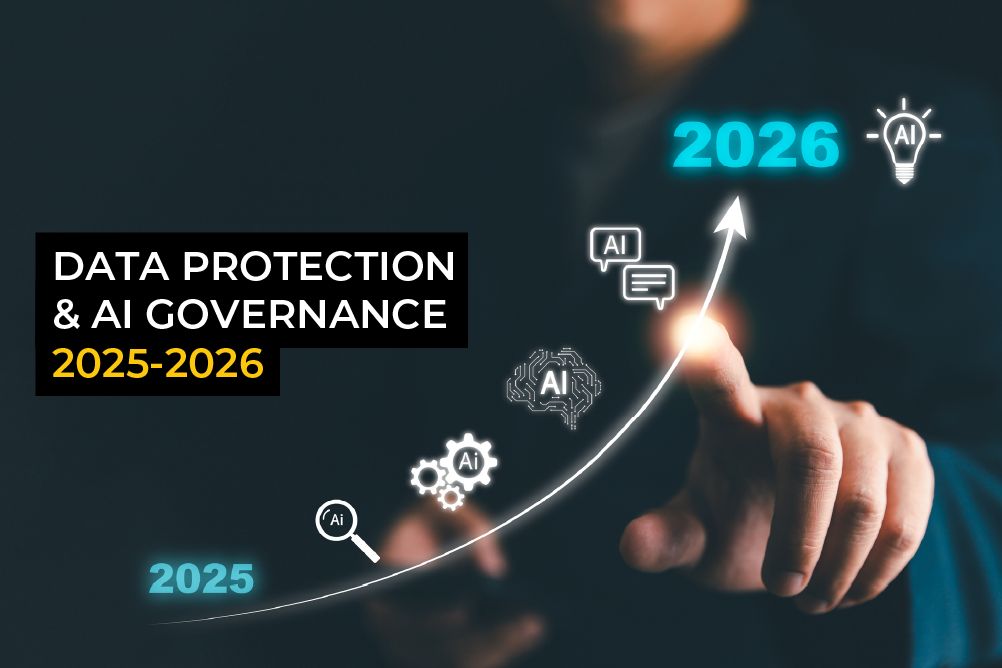
Data protection and AI governanceThe framework of policies, processes, and roles that ensure Artificial Intelligence (AI) is developed and used responsibly, ethically, and in compliance with applicable laws, societal expectations, and corporate values. have become increasingly intertwined this year as organisations scale AI into core products and processes. Although AI systems have always relied on datasets, the deployment of more sophisticated models into business-critical processes has increased the volume, sensitivity, and impact of that data. This shift means issues such as lawful personal dataInformation which relates to an identified or identifiable natural person. use, transparency, fairness, and explainability have become crucial elements for effective AI governance.
AI regulation has also accelerated. Organisations operating in the EU need to comply with the EU AI ActThe EU Artificial Intelligence Act was approved by the EU Council on 21 March 2024. A world-first comprehensive AI law, intended to harmonise rules for the development, deployment, and use of artificial intelligence systems across the EU., which introduces certain binding requirements on data quality, risk management, and transparency. At the same time, global data protection and privacy legislation has continued to evolve, often in different or even conflicting directions.
For multi-national organisations, the biggest challenge in 2026 will be managing data protection and AI governance across regions. Those investing in structured and adaptable frameworks will be better positioned to manage risk and maintain compliance, as well as building trust with regulators, partners, and customers.