
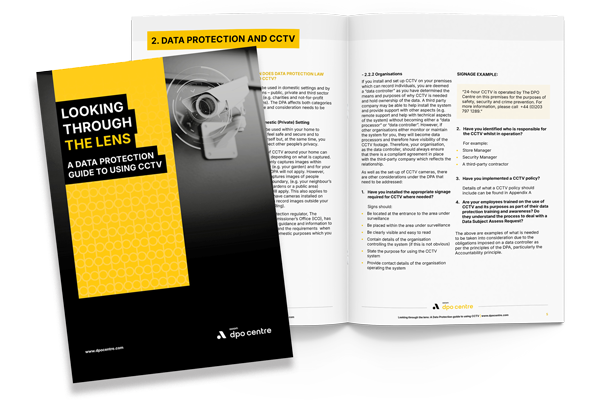
White Paper: A data protection guide to using CCTV
How do you use CCTV in a GDPR-compliant way?
If your CCTV system records identifiable individuals, your organisation is likely responsible for meeting data protection obligations as a controller under the General Data Protection Regulation (GDPR).
That means thinking beyond the camera itself. Signage, access controls, retention periods, internal responsibilities, and DSAR handling all need to be addressed if CCTV is to be used lawfully and responsibly.
This guide will help you:
- Understand the key data protection requirements for CCTV use
- Put the right policies, processes, and responsibilities in place
- Reduce risk when handling CCTV footage, including Data Subject Access Requests (DSARs) and disclosure
Do you need help managing CCTV compliance?
For organisations reviewing existing CCTV arrangements, introducing new systems, or responding to Data Subject Access Requests (DSARs) involving CCTV footage, external support can help reduce risk and improve consistency.
The DPO Centre supports organisations with CCTV-related data protection compliance, providing practical advice on governance, policy, DSAR handling, and wider privacy obligations.
If you would like advice on using CCTV, or any other data protection related issue you are facing, please contact us.