

A Data Protection Officer (DPO) provides specialist advice and oversight to help your organisation meet its data protection obligations and make informed decisions about how personal data is used.
Under the UK and EU General Data Protection Regulation (GDPR), certain organisations are legally required to appoint a DPO. Others choose to voluntarily appoint one, particularly when handling sensitive data or complex processing activities, or where in-house expertise is limited.

This page explains when a DPO is legally required, what the role involves, and how to decide if your organisation needs one.
WHEN IS A DPO LEGALLY REQUIRED?
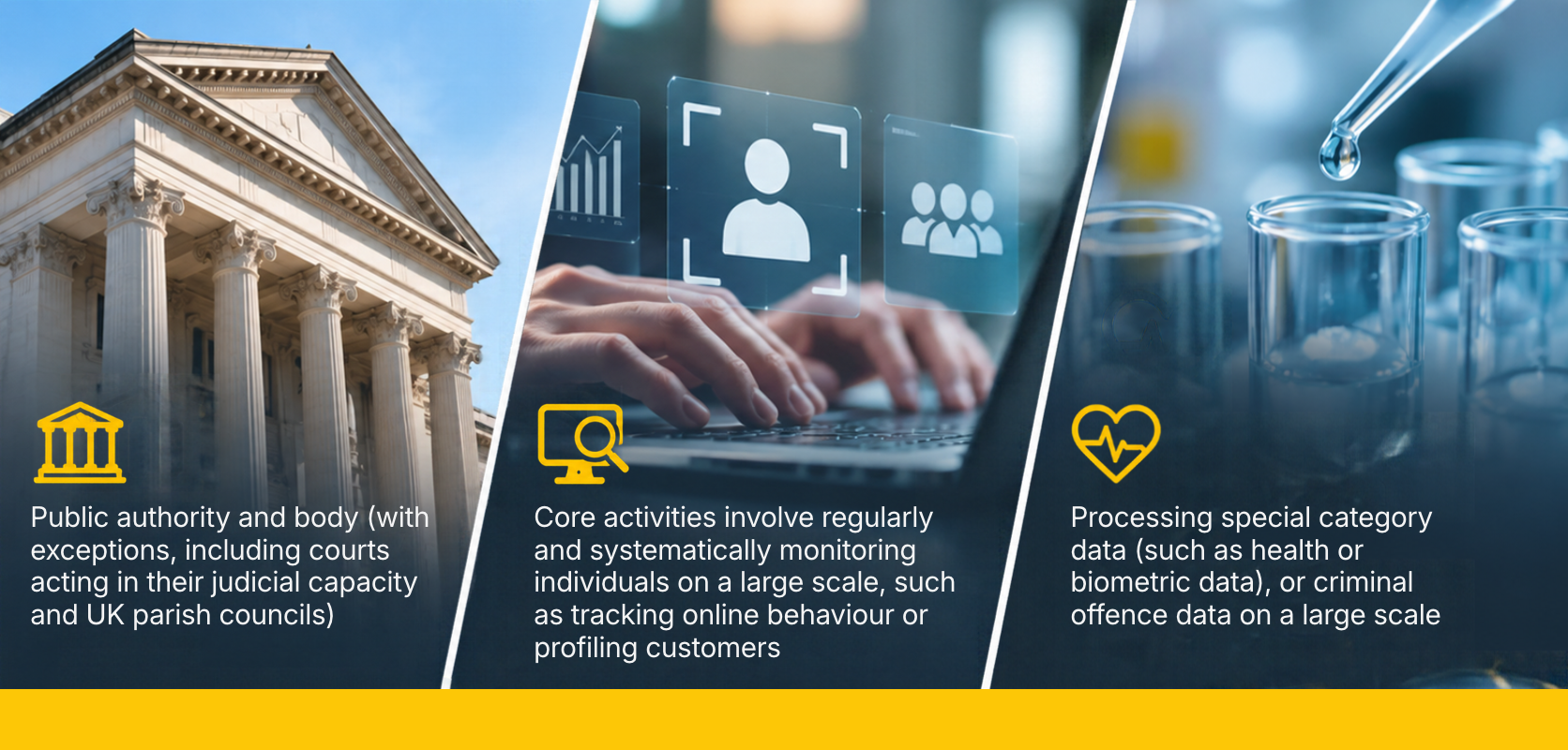
Whether you’re a small business or a large enterprise, the requirement for a DPO depends on the nature and scale of your data processing, not your organisation’s size. Under the UK and EU GDPR, you must appoint a DPO if any of the following apply:
What are the risks of not appointing a DPO?
Organisations that are legally required to appoint a DPO and fail to do so risk enforcement action, including fines from the UK’s Information Commission’s Office (ICO) or EU data protection authorities.
Even where a DPO isn’t legally required, a lack of specialist data protection oversight can lead to compliance gaps, mishandled data breaches and reputational damage.
Can you outsource the DPO role?
Under Article 37(6) of the UK and EU GDPR, a DPO can be an internal employee or fulfil the role under a service contract. Both options meet the GDPR’s legal requirements, provided the DPO fulfils their statutory responsibilities.
Outsourcing gives organisations access to specialist data protection expertise and independent oversight, without the cost and complexity of a full-time hire.
WHAT DOES A DPO DO?
A DPO provides independent advice and oversight for meeting data protection compliance obligations. The role covers:
- Compliance reviews, staff training and audits
- Advice on Data Protection Impact Assessments (DPIAs) and privacy risks in new projects
- Reviews of Records of Processing Activities (RoPAs) and other compliance documentation
- Personal data breaches and notification requirements
- Support with Data Subject Access Requests (DSARs) and other individual rights requests
- Point of contact point for individuals and supervisory authorities
To do this effectively, a DPO needs specialist knowledge of data protection law, independence from conflicting roles within the organisation, and a direct reporting line to senior management.
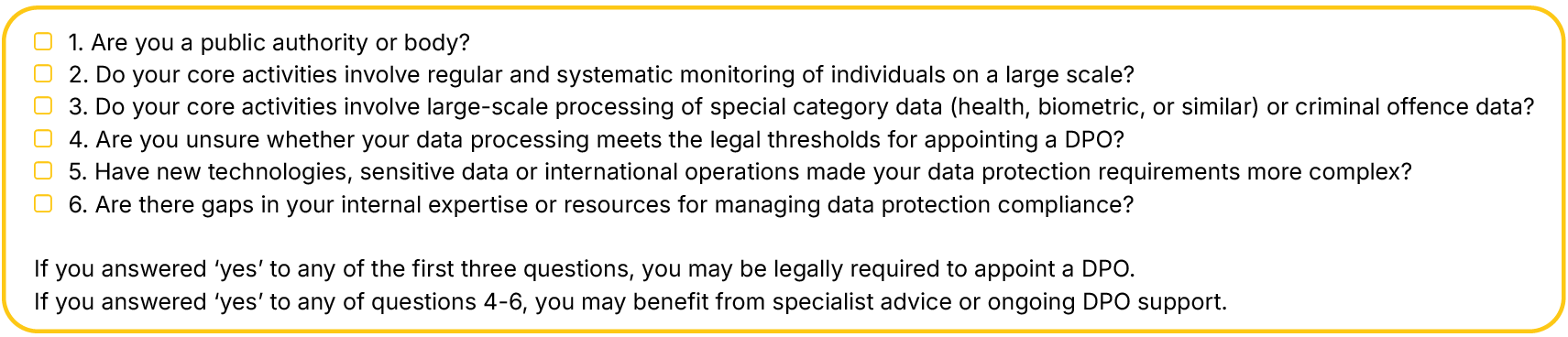
DO YOU NEED A DPO? CHECKLIST
Enquire Today
We’ve worked with 1,200+ organisations worldwide, providing outsourced DPO and AI governance services.
Fill in your details below for additional information and we’ll get back to you as soon as possible.